
Think Beautiful
Left-brain notes on a right-brain encounter with beauty


‘Think Beautiful.’
Two simple words received during a moment of contemplation earlier this year. It was a directive of sorts, accompanied by something like an instruction manual. An embodiment perhaps, a more-than-intellectual understanding of how to put them into practice.
Acting on the message, I quickly discovered that Think Beautiful is very effective at deepening my relationship with this thing we call reality. Over time it’s helped crystalize a deep and growing pillar of faith around my place in the universe. It’s cultivated in me the ability to extract meaning from even the smallest events and happenings in my life. It does not require me to understand, in any sort of logical way, exactly why.
At a more practical level, the practice is very effective at disarming fears. When I Think Beautiful, I find myself surrendering to the possibility - and increasingly the probability - that there is a deeply profound meaning inherent in all things. There is a magnificent and unfathomable upside to wherever it is that we’re going, for reasons that are hard to imagine today.
Importantly, the practice does not rely on any specific vision of what that profoundly beautiful future might look like.
Over the past half year I put Think Beautiful to work. As often as I can, in good times and bad, and especially whenever I catch myself playing some fear-based narrative in my mind about how some situation might turn out, I Think Beautiful.
So, what is this practice? A beautiful outcome is rarely the same as ‘things working out’, and it is hardly the outcome you might expect. For something to be beautiful it quite often needs to have an element of surprise. For a truly beautiful outcome, things must be revealed to be more brilliant and fulfilling than you could have expected, and in ways you couldn’t possibly imagine today.
This calls for something quite different to Think Positive. Sure, a beautiful outcome would presumably involve good and positive things for ourselves and the people we love. But ‘good’ gets murky very quickly. Good for whom, exactly? Your dream job is someone else’s rejection letter. And good as of when? Something you decided at 40 that felt like a win then can look very much like a wrong turn at 60. We are poor judges of what is good for us. The outcome we’re wishing for today will be lived by a future-self who may very well want none of it.
In fact, a beautiful outcome does not preclude what we might consider subjectively bad scenarios today. While few of us would picture ourselves or our loved ones suffering and call the image beautiful, if you were challenged to visualize a beautiful future that would justify your own suffering, what might it entail?
We all know this is not an entirely illogical thought exercise, because we’ve lived it. Any sort of personal loss, a divorce, bankruptcy, an illness: it was horrible at the time, unthinkable even. Yet when today-you looks back, it’s clear that the event served you. The suffering is redeemed through who you have become in spite of it, and in fact, because of it.
Luckily we don’t need to dwell on complications posed by the subjectively good or bad, because Think Beautiful is not about latching onto a specific version of the future at all.
It is, honestly, more of a vibe.
Somewhere out there is the coming together of a Grand Architecture with a beauty and goodness that exceeds any specific outcome you can imagine today, and in ways you are incapable of imagining today, and the practice is simply tapping into the feeling of that.
Once felt, the future doesn’t need to look like anything you might find subjectively desirable today, and that’s kind of the point.
Having spent much of this year practicing Think Beautiful, I can attest to how effective it is. It gives me a tangible lift to mood and has an uncanny effect on how my own life seems to unfold.
The success of the practice got me thinking. What is actually happening when I Think Beautiful? What’s so special about this pillar of the so-called transcendentals? What exactly is beauty?
the realm of potential

The question is a searching one, and it goes far beyond the old cliché that beauty is merely in the eye of the beholder.
Perhaps unsurprisingly, when I typed “beautiful” into a stock image search for this essay, I got back hundreds of photographs of gorgeous women, along with the occasional sunset on a beach, and a blooming flower. That is one kind of beauty, but a rather narrow one.
At the outset it’s tempting to think of beauty as purely subjective. Classical music did nothing for me as an adolescent, but that says nothing about its beauty. I simply wasn’t disposed to it yet. The world is large and life has many seasons, and we’ll each meet countless beautiful things we never warm to, and that’s fine. Still, the failure to be moved isn’t proof there was nothing there. Something objective is going on when we witness beauty, even if it’s only part of the story.
So beauty doesn’t live objectively in the thing itself. Nor does it live subjectively, as a projection of our own making. It lives somewhere in between, in the realm of potential.
For this, John Vervaeke has coined the word transjective, an important concept that points to what arises in the relationship between, but does not belong fully to either the objective nor the subjective.
This matters for Think Beautiful. If beauty lives in the relationship, then anything that changes the relationship should register on both ends, which is exactly what I have found. The practice changes my mood, yes, but it also, uncannily, seems to change what shows up.
I’m not claiming the practice bends the world to my will. Something subtler, and stranger, is going on. If beauty is transjective, then the potential for it has always been there. Looking at the future through the lens of fear, I find threats. They are always available, if I want them. Looking through the lens of beauty, possibilities I could not see before begin to disclose themselves. They were always available too, and not just in the form of pleasing aesthetics. Think Beautiful has a spiritual orientation, not just an aesthetic one. It’s something closer to the beauty of life itself, of awe.
McGilchrist has been saying this all along, of course. How you attend to the world changes how the world attends to you. Recalibrate what you find relevant and you quite literally live in a different world.
Think Beautiful has been an exercise in living out that theory.
a summoning

What exactly am I invoking then, when I Think Beautiful?
There’s more philosophy on beauty than you could read in a lifetime. You could also skip the reading and just live beautifully, then watch what happens. That’s the conclusion I’ve reached, and if it’s yours too, you may quite happily skip to the end of this essay.
But having done the latter for most of this year, I recently took it upon myself to do the former. I have a bad habit of hunting left-brain rationale for right-brain experience, and for my sins I stumbled upon John Vervaeke’s Primacy of Beauty lecture series.
A series of eight heady lectures weave cognitive science and philosophy around a single idea, borrowed from D.C. Schindler: that beauty is primary. It’s a bold claim, and a confusing one. I wasn’t sure what to make of it at first. To start with, it helped to understanding what the claim is not. It isn’t hierarchical, Vervaeke isn’t ranking the transcendentals, putting Beauty above Truth and Goodness. Nor does he mean primacy in the ontological sense.
It’s something stranger. To get at it, he invokes the image of a mother smiling at her baby1.
There’s a lot in that smile. It’s tempting to think of it as just a trick of evolution, tuned over millions of years to soothe the child. But seeing it as biology alone misses something deeper.
And it is this: we all have a deep longing to belong. This seeking for integration in the world is at the core of what it means to be human, built into the very fabric of our existence. We are hard-wired for wholeness. This need for belonging is core to the primacy claim: Schindler is suggesting that the mother’s smile is nothing other than the origin of self. You first discovered you existed because someone else loved you. This discovery is made through the mother’s smile.
It’s a rather epic claim and I take it to mean, quite literally, that the smile wakes up the child’s self-consciousness2. The smile is summoning the infant. It says: You are real, you belong, and the universe welcomes you. Schindler is claiming that your entire identity begins there. Your first shape of self in this world is cast by this initial experience of completely unearned, gratuitous love.
Under that smile the child comes to know, long before it can reason, that being here is good. That this is home. So he smiles back.
the first move

Schindler describes this as the ‘first move reality makes towards us’. It goes some way to explaining why, of the three transcendentals, beauty comes first. Truth needs a developed mind that can reason and weigh and judge, and goodness needs a will that can choose. Both of those come online later, once the child has grown into them.
Beauty asks nothing of the child, except to be, and to behold his mother’s smile.
Beauty is the opening move, the first thing reality does before we’re able to do anything back. It welcomes us into the world before we’ve developed the capacity to even to ask where we are.
If this somewhat poetic take lands for you, but you still need to scratch that rationale itch, Vervaeke goes on to build a cognitive-science account that runs parallel to Schindler’s largely metaphysical one.
His assertion is a little broader, and at first just as confusing. In essence, he defines the experience of beauty as the moment when reality discloses itself to us.
Which seems absurd. A poetic exaggeration, maybe even a lovely one, until you really think about it. Reality can be beautiful but it can also be horrific, and we tend to file those two at opposite ends of the spectrum. If beauty is how reality discloses itself, how does it account for when reality is so often a nightmare?
To get there we’ll need to take a short detour first, through something called the hermeneutics of suspicion.
a cosmic marriage

Modernity has trained us to be cynical. The great unmaskers3 of the modern age taught us to distrust appearances, to read every surface appearance as a cover for something less flattering underneath: power, money, biology.
The end point of this is a world drained of meaning. We’re left believing meaning is just something we project onto a blank, indifferent canvas.
Vervaeke points out a logical trap in this great skepticism: you cannot call something an illusion unless you have a standard for what is real. There is no tall without a comparison for short. So the hermeneutic suspicion implies that some appearances do disclose reality, otherwise the word illusion would mean nothing.
Bear with me, because this starts to get Vervaeke-weird.
He embarks on a cognitive-science account of the transcendentals that begins with a simple fact about us: we are finite beings in an infinite world. At every moment far more information reaches your senses than you could ever use: too many details to notice, too many ways to combine them, an infinite number of possible paths you could take. If you tried to process all of it, as if a machine, you would freeze on the spot. So your brain does the opposite. It ignores almost everything and zeros in only on the tiny sliver that matters.
This filtering is called relevance realization. It’s not something we do consciously, and it isn’t an algorithm going through a list and picking out what’s salient. It’s our as-yet unexplained ability to instantly sort what matters out of an infinite field of possibilities, a self-organizing process that is constantly evolving to fit us to our environment.
For relevance realization to work, the map in our mind has to actually touch the territory of reality. Vervaeke argues there can be no gap between mind and world. If there were, you’d need a middleman to bridge it, then a middleman for that middleman, on and on into an endless regress. Since we plainly do act, and mostly get it right, the gap can’t be there in the first place. There is nothing between our minds and the world for a middleman to bridge.
So we don’t merely correspond to reality across a distance, we’re wedded to it. This marriage is what allows us to function at all. To act in the world, our internal structures have to conform to the actual structure of things.
Which sounds like something you could prove, until you try. Philosophers call it the problem of the criterion: you can't prove reasoning is trustworthy without using reasoning to do so, an infinite regress. And so since the marriage between mind and world can’t be argued for, we live on trust instead.
This is what I think Vervaeke means, somewhat obscurely, by the True and the Good. The True is that reality is built to be understood. The Good is that we are fitted to understand it. When we are aware that we are implicitly trusting both, we can stop seeing the world as an indifferent void.
At this point, if your head hurts, please join the club. But if you’ve made it this far, you’re in good shape to understand his definition of beauty.
If there exists a promise that reality is built to be understood, the beautiful, for Vervaeke, is the experience of that promise being kept.
Without pretending I fully grasp it all, I think the core of what Vervaeke is getting at is fairly simple. My interpretation of it is this:
We are built to belong in this world. Beauty is what it feels like when we know that we do.
a massacre
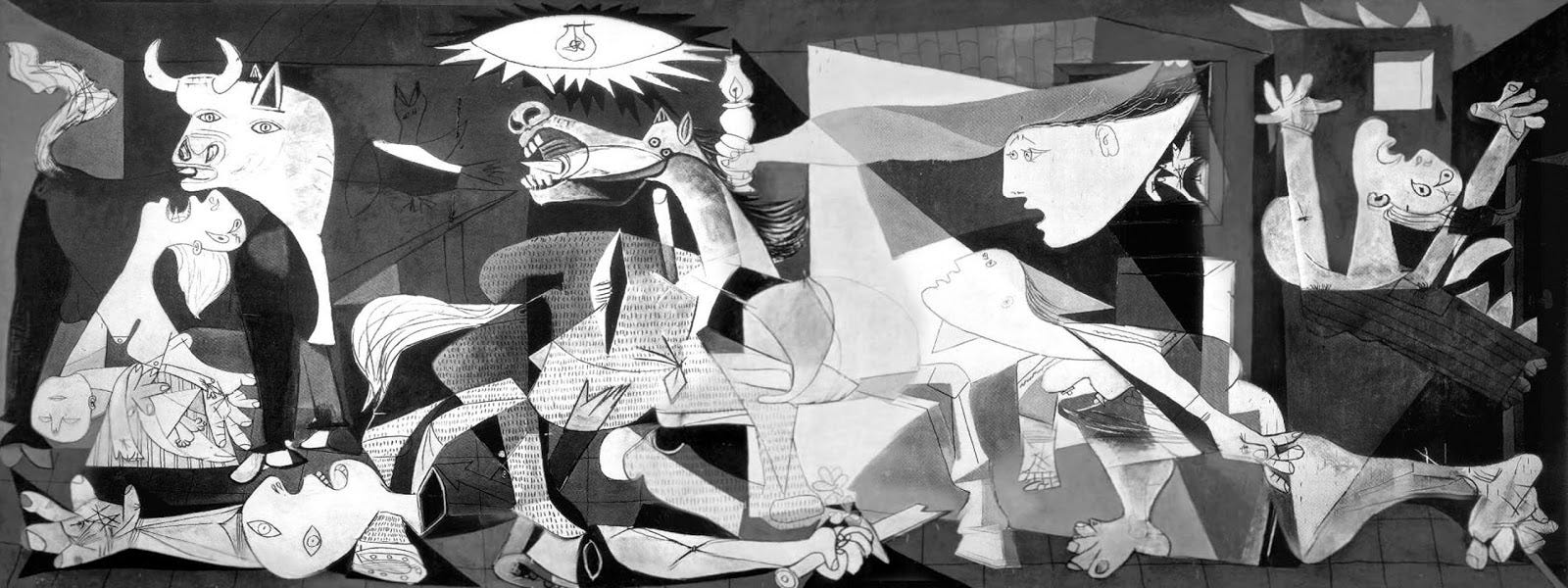
Is this what I’m tapping into when I Think Beautiful? A sort of gravitation closer and closer to belonging, the feeling of magnetism towards ‘the really real’?
Vervaeke’s lectures are hinting here at a cognitive-science explanation for the workings of my practice. It’s undeniable there is a deep connection between Think Beautiful and the cultivation of meaning in my life. And I can just about get my arms around the mechanism he is describing: how I attend to reality changes what the world discloses to me, and attending through beauty discloses a world that is intrinsically meaningful.
By this point in the lecture series I become aware of my inability to distinguish truth from pseudo-profound bullshit4. You could read “beauty is a disclosure of the intelligibility of the world” as elaborate word-smithing for “we evolved to survive.” No doubt there’s beauty in the mere fact that our fittedness to the world and vice versa is happening at all, but this alone doesn’t equate to a definition of beauty itself.
I have more questions than answers, the most pressing being:
If beauty is reality revealing itself, what do we do with the fact that reality is so often horrific?
To get anywhere with that, we need to be surgical about how Vervaeke defines beauty and horror. First, we need to throw out the stereotypical definition of beauty. For Vervaeke it doesn’t mean pretty, or pleasant, or nice to look at. It’s something else entirely: the moment an appearance discloses reality.
A cursory interpretation of this raises major issues. A senseless act of abuse is as much part of reality as anything else, and it would be obscene to call it a disclosure of beauty. So whatever is being disclosed, I doubt he means it as a Brahmanic reassurance that all things are secretly benevolent, and therefore beautiful.
I don’t think Vervaeke is selling that naïve view. I had to dig a bit to find his direct position on this, wherein he admits he has no patience for theodicies: rational arguments that try to explain why evil exists. Evil is not a problem that can be solved, it is woven into the tapestry of reality, and the only honest posture toward it is to dwell in its mystery rather than explain it away.
So what is he actually saying? A clue lies in his distinction between the horrific content of reality and the act of disclosure itself. He uses the example of Picasso’s Guernica, painted in 1937 to depict a horrible massacre that occurred during the Spanish Civil War. The killing of mostly women and children is hellish by any measure, yet the painting is almost universally held as a masterpiece, and described as one of ‘the most moving and powerful anti-war paintings in history’.
Vervaeke claims the painting is beautiful because it truthfully discloses the full, terrifying presence of evil. It cuts right through the propaganda and shows us the thing itself. The beauty is not in the suffering. It’s in the unflinching realization that this very evil is real, in looking straight at what most threatens us and refusing the veneer.
That veneer is what, borrowing from Byung-Chul Han, he calls the smooth. The smooth, not the horrific, is the real opposite of beauty. It’s the frictionless surface, the endless scroll, the pornographic. It asks nothing of you and gives nothing back. It hides reality behind something easy to swallow.
Vervaeke isn’t hating on smooth aesthetics here. He is using the word to point at something that prevents a genuine experience of beauty. The smooth is empty because it offers no resistance and demands no growth. The smooth is the enemy of mystery.
plenitude

Beauty does the reverse of the smooth. It can be striking and disruptive. It is built to shock you out of the way you are seeing things and deliver up a new way of seeing.
What's interesting is that Vervaeke leans into an ancient sense of beauty we seldom think about: its striking and disturbing side5. He isn't dismissing the ordinary kind, though. He places beauty on a range that can begin with the visceral and the merely attractive. A child watching a snail, a bird of paradise in full bloom, a sunset, all of these are beautiful, if they open into wonder. But he dwells on the striking and disturbing for a reason. His worry is that we get stuck at the merely attractive, and let it stunt our sense of the full scope of what beauty can be.
Not every shock is beautiful, though, and his thesis relies on a distinction here. Vervaeke separates intelligible shock from mere horror. An intelligible shock is the jolt that tells you reality is not what you assumed, and then asks something of you. It is the demand in the last line of Rilke’s Archaic Torso of Apollo, standing before the broken statue and hearing “you must change your life!”. That is the call to metanoia, a fundamental reorientation of one’s entire being.
This is where I think awe comes in, the other word I reached for when I first described Think Beautiful. Awe is what we feel in the presence of something too vast for the frame we brought to it. The frame has to break and widen to let the thing in. And because the call comes from something you recognise as more real than the frame you had, answering it feels like becoming more yourself. This is how a larger reality gets internalised, and I have come to believe Think Beautiful is a way of stabilising that access, keeping the door to it open in ordinary daily life.
Mere horror does the opposite. Vervaeke defines it as the Lovecraftian kind: so overwhelming and absurd that it crushes your ability to understand anything at all, leaving only despair. “True horror asphyxiates”, he says.
A friend recently gave me a line of thinking from Calvino's Invisible Cities: that the limits of language, of memory, of a single book that cannot hold every word, are what produce beauty, because they produce finitude. Beauty lives in the finitude of a thing because finitude is what lets us take hold of it. It is also what gives us our sense of belonging, of being fitted to the world. Take finitude away, strip out death and limits, and beauty goes with them.
Here it helps to picture a spectrum. At one end sits the smooth, a world that discloses very little: no friction, no resistance, no growth. At the other sits mere horror: a world so overwhelming and boundless that it is void of meaning and leaves only despair. The smooth gives you nothing to grasp. Mere horror gives you too much, and is too formless to ever grasp. Beauty is the finite middle, the band where reality has enough edge to disclose something real and enough limit that you can actually take hold of it. Beauty is real contact you can survive.
I may be way out of my depth by now, swimming in a Vervaeke sea of Socratic philosophy and cognitive-science koolaid, but I think I can see how belonging, and meaning itself, emerges where reality meets us at the frontier of our becoming. Maybe that’s what beauty is, that contact we make in the transjective realm of potential, the moment reality gets through and evidences I am not a stranger in an indifferent void.
It is certainly not proof that the world is kind. It’s only proof that I am not separated from reality, and that reality is not just a blank screen for my projections.
Reality is a “plenitude of meaning”, something that never runs out of depth. There is always more here. More to meet, more to be moved by, more to become.
We are not strangers in the void. We are at home in a world that keeps disclosing itself and will never run out.
creative arrivals

While Vervaeke may not be a conventionally religious man (he describes himself a Zen Neoplatonist), I believe he is clearly implying that the universe has a logos: an inherent structure that draws us forward and that answers to our own capacity for reason.
If that is where you part ways with Vervaeke, you are in good company. Tim Freke, one of my favourite contemporary philosophers, departs here as well, and since his philosophy of Unividualism has shaped my own thinking, I would be remiss not to bring his view of beauty into this.
For Freke, all this talk of beauty revealing a hidden depth or keeping an eternal promise is what he calls ‘philosophical afterbirth’: leftovers from a pre-evolutionary way of seeing that still clog up our thinking. To him the world is not implicitly built to be understood and beauty is not the uncovering of some ancient logos. Our marriage with reality is just evolution doing what works, and Vervaeke, on this view, is romanticising survival by dressing it in the transcendentals.
Beauty is not a discovery at all. It is the genuinely creative arrival of something brand new.
He treats it mostly as an evolution of pleasure, a basic yum-and-yuck reflex that, as life grows more complex, climbs into the register of the soul and refines into the aesthetic sense we have now. Which is why our standards of beauty keep shifting. Jazz sevenths were first heard as discord and widely disliked. I was more than a bit surprised to discover 18th-century travellers drew their carriage curtains to shut out the ugliness of the Alps, mountains we now cross continents to admire. According to Freke we are not discovering beauty. We are co-creating it, right now, as the universe keeps becoming.
If he is right, there is no ‘hidden real’ being disclosed and nothing to unmask. Beauty is pure invention. Logos is not some pre-existing structure but something more informational in nature, the thing that gives rise to our probabilistic and contingent universe. It’s all a creative process, and it doesn’t really know where it’s going. There is no standing intelligibility keeping faith with us, no logos we are coming home to.
So which is it? Has 3.5 billion years of refinement finally tuned us to grip patterns that were there all along, or are the patterns themselves still forming as we emerge to meet them?
I have come to think the question matters very little, because I think I’ve found a place where the two would actually agree. One of the axioms of Unividualism is that nothing is ever lost, that everything which ever was remains held in the present state of the world, in our pastivity, which carries the rather comforting implication that absolutely everything is ultimately redeemable. That is remarkably close to Vervaeke's sense that reality is an inexhaustible fount of meaning6.
Which is why, honestly, whether beauty was there from the start as a marker of reality, or is arriving with the becoming, does not matter much to me. What I keep encountering when I Think Beautiful is the same thing either way: an awe at the depth of meaning inherent in all things past and yet to come.
If it was there from the beginning, it is a beautiful promise. If it is emergent, it is just as precious, because we are among those co-creating it.
a paradise of meaning

Earlier I called Think Beautiful more of a vibe than anything that can be logically described, and Vervaeke gives that instinct some backing. He likens beauty, quite literally, to a calling. The ancient Greek word for beauty, κάλλος (kallos), has its roots in “to call forth.” Reality is summoning us, and something in us answers.
Think Beautiful, I am coming to see, works in exactly that way. It is not me issuing instructions to the future. I am simply making myself available to be called by it. Instead of settling into a particular fantasy of how things should go, I look at the future through the lens of beauty, with no specific outcome to hold onto and no need for one.
I started this essay meaning to work out what sits behind the practice, to explain it. But that is not how Think Beautiful came to me. It arrived as something I did before it was something I understood, and it has changed my relationship with reality far more than it has settled any question about the nature of beauty.
I did not understand the mechanics of it when I began, and I still don’t fully understand them now. The theory, it turns out, is optional. The practice has done more for me than I expected. In living it, I have come to find that our world is a paradise of meaning, and that the more you look, the more of it is waiting.
For those who would call this faith by another name, you are largely right. A re-acquaintance with the sacred, with awe, with faith, in a world short on all three, ranks highly on my list of important things. Without belonging to any tradition, yes, I guess you could call Think Beautiful a form of faith: the willingness to treat the future as brimming with meaning, and to trust that reality is a place I, and the people I love, can be at home in. Beauty itself will always escape definition, and whether it discloses the real, or is simply the most emergent form of our evolutionary dispositions, or something else entirely, turns out not to matter for the practice.
Though I have to admit it makes me smile to think that every time I Think Beautiful, I might, in Vervaeke's terms, be practising falling a little more in love with the inexhaustibility of reality.
So here is my invitation. Consider the possibility that this mystery we call reality, and our place in it, is endlessly meaningful down to the smallest iota.
Think Beautiful, and see what gets called forth.
I cannot say what that will look like. Neither can you.
But we can count on it being beautiful.
Speira is a private community committed to cultivating consciousness and exercising meaningful agency in the world.
Our world is in desperate need of credible, optimistic, post-materialist worldviews. Ones that transcend and include materialism, honouring all that the scientific revolution has given us, while recognising that it has been necessary but not sufficient for what comes next.
Speira is at the forefront of this discovery process. If you’re interested in joining Speira, you can learn more here.
The image itself is Hans Urs von Balthasar's, from the opening of his work on theological aesthetics.
Balthasar’s claim is not that the child is inert before mum shows up. The child is obviously already conscious. What the smile summons is the “I”, and it does so by being addressed as a “thou”. The precise claim is that this ‘self-consciousness’ arrives through being addressed, not before it.
Vervaeke introduces the term ‘the great unmaskers’ to refer to the thinkers who trained modernity to distrust appearances. Ricoeur called them the masters of suspicion: Marx, who read culture as a mask for class interest, Nietzsche, for the will to power, and Freud, for underlying drives.
I say this tongue-in-cheek, and with the utmost respect for John Vervaeke, who, as I’ve outlined in other essays, I have much to thank for showing me how to honor the mystical depth of my own experience without abandoning intellectual rigor.
Vervaeke explicitly credits Plotinus for the ancient view that beauty is fundamentally "striking and disturbing" rather than merely pleasant or "smooth".
And both rhyme with the Tao Te Ching, which Vervaeke invokes in his series, which likens the Tao to ‘a well you cannot empty’.
Love it Michael. I’m on my second re-reading and listening. Was it Dostoevsky who said “Beauty will save the world”